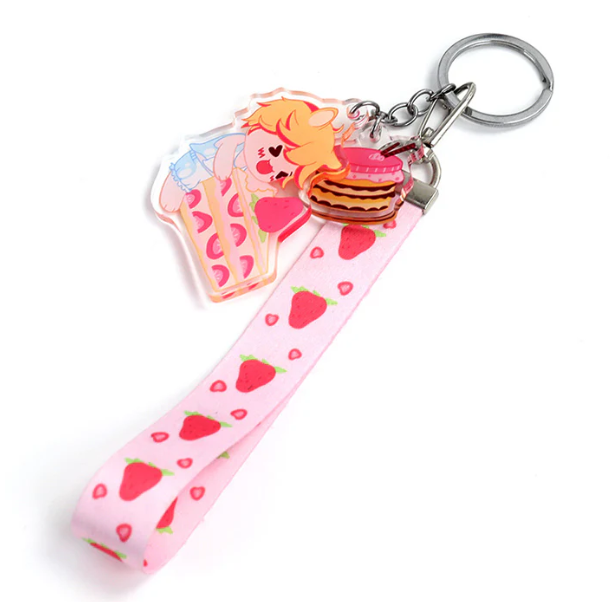
Straps That Tell a Story: The Remarkable Journey of the Lanyard Keychain
Sometimes the most helpful inventions aren’t flashy. With straps, loops and plain old cords repurposing the way we organize life. Chief among these is the lanyard keychain, a basic piece of kit that’s been around for hundreds of years and at long last has found a way to combine history, flair, and some common sense. Once practical accessories for sailors and soldiers in the 16th century, lanyards have come a long way from battlefields to become a fashion-forward, multiuse accessory. Their classic style is an example of how something so simple can be timeless across generations and demographics.
From Sea to Server, How Far to Hydrogen?
What is now a fixture in offices and conventions was born centuries ago, in rougher company. Lanyards, the first ones at least − short thick cords, and leather ties − were eminently practical tools for soldiers and sailors in 16th-century Europe. These early prototypes kept knives, whistles, and compasses handy even during storms or in battle so that nothing critical was lost overboard or left at the worst time.
Although the design was rudimentary, the idea held weight: a wearable tether for necessities, never more than a hand’s reach away.
A Tool for Every Age: Refashioning Usefulness
The lanyard keychain changed with industrial advance and the introduction of new materials. In the 20th century, synthetic materials lightened and strengthened those accessories, as well as making them cheaper. All of a sudden, lanyards were not just for staying alive − they were for living.
By the middle of the century, offices and factories and schools were using something like lanyards for keys, followed by ID badges. The lanyard keychain transitioned from military accoutrement to desk job staple, and now helps keep access cards, USB sticks and event passes within easy reach for millions around the world.
Above and Beyond Function: Design, Identity, and Popular Culture
The largest change had to do with personalization. Lanyards no longer blended in as makers tried out new patterns, colors and even whether to stamp a company’s logo on them. The lanyard keychain was an easy way to add a pinch of personality or demonstrate group belonging − from fandom badges at comic cons to color-coded team straps at work.
Events and brands and fandoms all piled in, until suddenly, everyone wanted a version that fit their personal brand profile: something in street smart eco-fabrics, something metallic shiny and something with a handful of high-tech features.
See also: How to Sell SEO Services to Local Businesses
Today’s Marvel: Multipurpose and Modern
The once-simple string whose time has more than come to evolve, thanks to our plugged-in world, the lanyard keychain:
- RFID blocking for added security
- USB integrated storage
- Special snap locks, quick release custom safety clasps
- Sustainable prints and recyclable materials
Designers still draw inspiration from both the past and future − functioning with flair.
Useful, Personal and Here to Stay
So, why does the lanyard keychain matter? Because it’s a product that has spanned years − always in-season, always evolving. It structures our lives while acting as a mirror of who we are and occasionally even storing our dearest memories.
So, the next time you sling on your lanyard keychain, remember: you are participating in a tradition that is centuries old, and carrying not just your keys or card but a living piece of history.